Indian Relay Racing
The Sport
The Sport
What Is Indian Relay Racing?
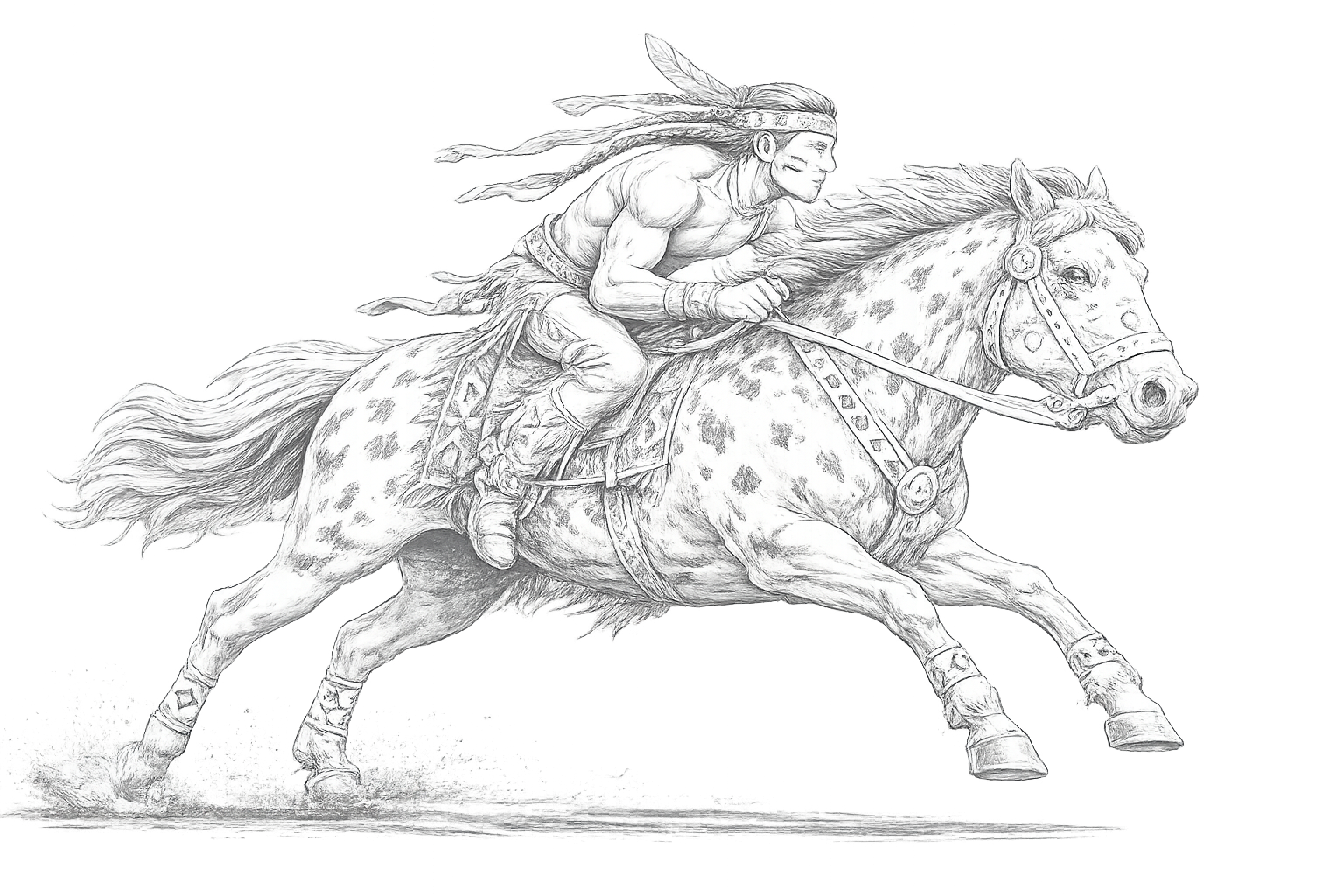
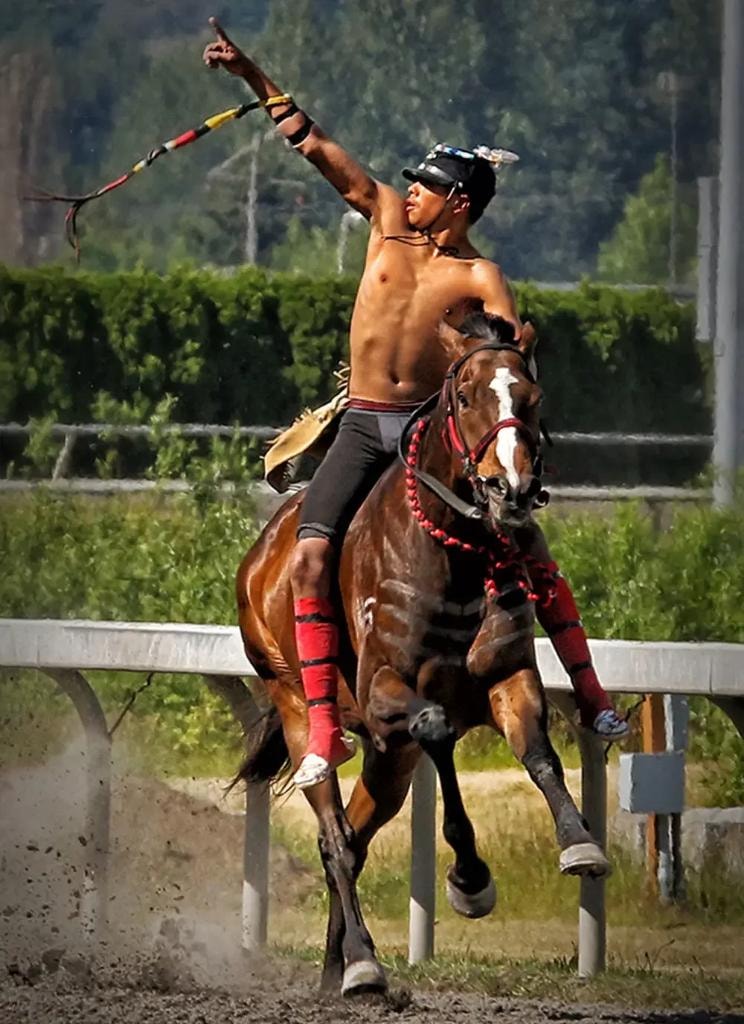
Indian Relay Racing is a team equestrian event in which a single rider races bareback on three different horses over three consecutive laps — switching mounts at full speed between each lap. There are no saddles, no stirrups, and no slowing down. The horse change is executed in seconds by a team of specialists: a mugger who catches and controls the incoming horse, and horse holders who manage the fresh mounts. The first team to complete all three laps wins.
The athleticism required is extraordinary. The rider must dismount a galloping horse, sprint to the next mount, and launch back into a full gallop — all within a few chaotic, thunderous seconds. Crowds who witness it for the first time are invariably stunned. Those who see it regularly call it the most exciting two minutes in American sport.
The Exchange — the defining moment of every race
Race Format
How a Race Works
The Start
Teams of four — one rider and three horse handlers — line up at the starting gate. Each team has three horses assigned for the race.
Lap One
The rider launches bareback on the first horse, racing a full lap of the track at maximum speed.
The Exchange
At the exchange point, the mugger catches the incoming horse while the rider leaps to the second mount — all at near-full gallop speed.
Laps Two & Three
The process repeats for laps two and three. Three horses, three laps, three exchanges. The fastest team across the finish line wins.
History & Culture
Five Centuries of Tradition
Indian Relay Racing traces its origins to the horse cultures of the Great Plains and Plateau nations — peoples for whom the horse was not merely a tool but a partner, a symbol of freedom, and a measure of a warrior's skill. Racing was a way to demonstrate horsemanship, build community bonds, and honor the relationship between rider and animal.
After the introduction of the horse to North America in the 16th century, relay-style racing became embedded in the ceremonial and social life of dozens of tribal nations. The sport survived the forced assimilation policies of the 19th and 20th centuries, preserved by communities who refused to let their traditions die. Today, Indian Relay Racing is experiencing a renaissance — drawing larger crowds, more tribal participants, and growing national attention.
Pre-1600s
Horse cultures develop among Great Plains and Plateau nations; relay-style racing emerges as a test of horsemanship and community celebration.
1600s–1800s
The horse spreads across North America; relay racing becomes embedded in the ceremonial and social life of dozens of tribal nations.
1800s–1900s
Forced assimilation policies threaten traditional practices; tribal communities preserve relay racing through resilience and cultural determination.
Late 1900s
A revival begins as tribal nations reclaim cultural practices; organized relay racing events grow across the American West.
2000s–Present
The NHIRC is established; Indian Relay Racing draws national attention, larger crowds, and growing calls for formal sanctioning.
Leading riders and teams from seven different Nations covering ID, MT, ND, SD, WA, OR, AZ, WY and Canada display their skills and daring as they battle it out on the race track. Imagine if you will, watching five determined teams consisting of three horses, one rider, one mugger and two holders, entering the track, each taking their designated box in preparation to the start of the race. All of the teams have spent months practicing and feel confident that they will bring home the honors. Each of the fifteen horses are primed for the start of the race, ready to leap into action, anticipating the glory of the race. The holders and mugger ready to do their job, despite the risk of personal injury to themselves, as the horses come in for their exchanges.
They are all working together to keep their team safe and be the first to cross the finish line. The thrill of the race is tangible and addictive to everyone attending. Chiefs, Warriors, and Maidens also compete for a win, all while riding bareback fearlessly against one another to claim individual titles of their own.
"The relay is attractive to Native American boys who grow up on reservations. Most have access to horses and have tried some of the skills. They pride themselves on being horsemen and on becoming one with their horse. He calls the drive to do their best the warrior spirit in them."
— Calvin Ghost Bear — August 8th, 2016 issue of Montana Senior News by Bernice Karnop
Youth Development
The Next Generation of Riders
Horse Nations Indian Relay Council feels the need to encourage these young riders, who can start competitive racing at the age of 6 years in youth relays, to achieve these goals and dreams. And while they ride their relay ponies just like the adult teams, they do so on a much smaller scale. HNIRC plans to host multiple youth relay race events to help start them on the road to accomplishing these goals while providing them support and guidance.
Our Experience
Proven Race Management Across Five States
HNIRC has a tremendous amount of experience managing both large and small scale races covering 5 states and multiple local reservations, including small hometown tracks, county fairs, pow-wows, and large scale race events. These events provide the attendees with an experience they will never forget and leave them wanting more.
"The heart pounding, the hooves, the adrenalin, the crowd, the excitement — Bettors aren't going to get that anywhere else."
— Calvin Ghost Bear — August 8th, 2016 issue of Montana Senior News by Bernice Karnop
The Opportunity
Why the Racing Industry Is Ready for IRR
The American horse racing industry is actively seeking new audiences, new content, and new revenue streams. Indian Relay Racing delivers all three — and it does so with a product that no other sport can replicate.
Unmatched Spectacle
Indian Relay Racing is visually unlike anything else in American sport. The bareback exchanges at full gallop produce moments of pure athletic drama that translate powerfully to broadcast and live audiences alike.
A New Wagering Market
Pari-mutuel wagering on Indian Relay Racing would open an entirely new betting market — one with built-in tribal community engagement, passionate fan bases, and a sport that is inherently unpredictable and exciting to wager on.
Tribal Nation Partnerships
With 30+ tribal nations already participating in NHIRC events, Indian Relay Racing brings institutional relationships and sovereign land access that create unique opportunities for track operators and simulcasting networks.
Authentic Cultural Narrative
In an era when audiences crave authenticity, Indian Relay Racing offers a story that is genuinely irreplaceable — centuries of living tradition, community pride, and athletic excellence that no marketing campaign could manufacture.
Regulatory Readiness
Horse Nations Racing Group, LLC is actively building the governance frameworks, drug testing protocols, and officiating standards that state racing commissions require. We are not asking regulators to take a leap of faith — we are doing the work to meet their standards.
Growing Momentum
Attendance at NHIRC events has grown steadily. Media coverage is expanding. The sport is ready — and the window to be an early mover in this market is open now.